Does a work pickup need commercial registration and insurance in California?
Vehicle design, actual business use, weight, and who drives it can affect registration and insurance, so review both records before putting a pickup to work.
Key takeaways
California DMV classifies commercial vehicles by design and use, including vehicles used to transport property or people for hire, compensation, or profit.
Registration classification and insurance coverage are separate reviews; a registration card does not prove the policy covers business use.
Bring actual use, drivers, equipment, towing, mileage, and weight details to both conversations.
Start with what the pickup carries and why
California DMV says commercial vehicles include vehicles used or maintained to transport people for hire, compensation, or profit, or designed, used, or maintained primarily to transport property. Its examples include commercially used pickups and motor trucks.
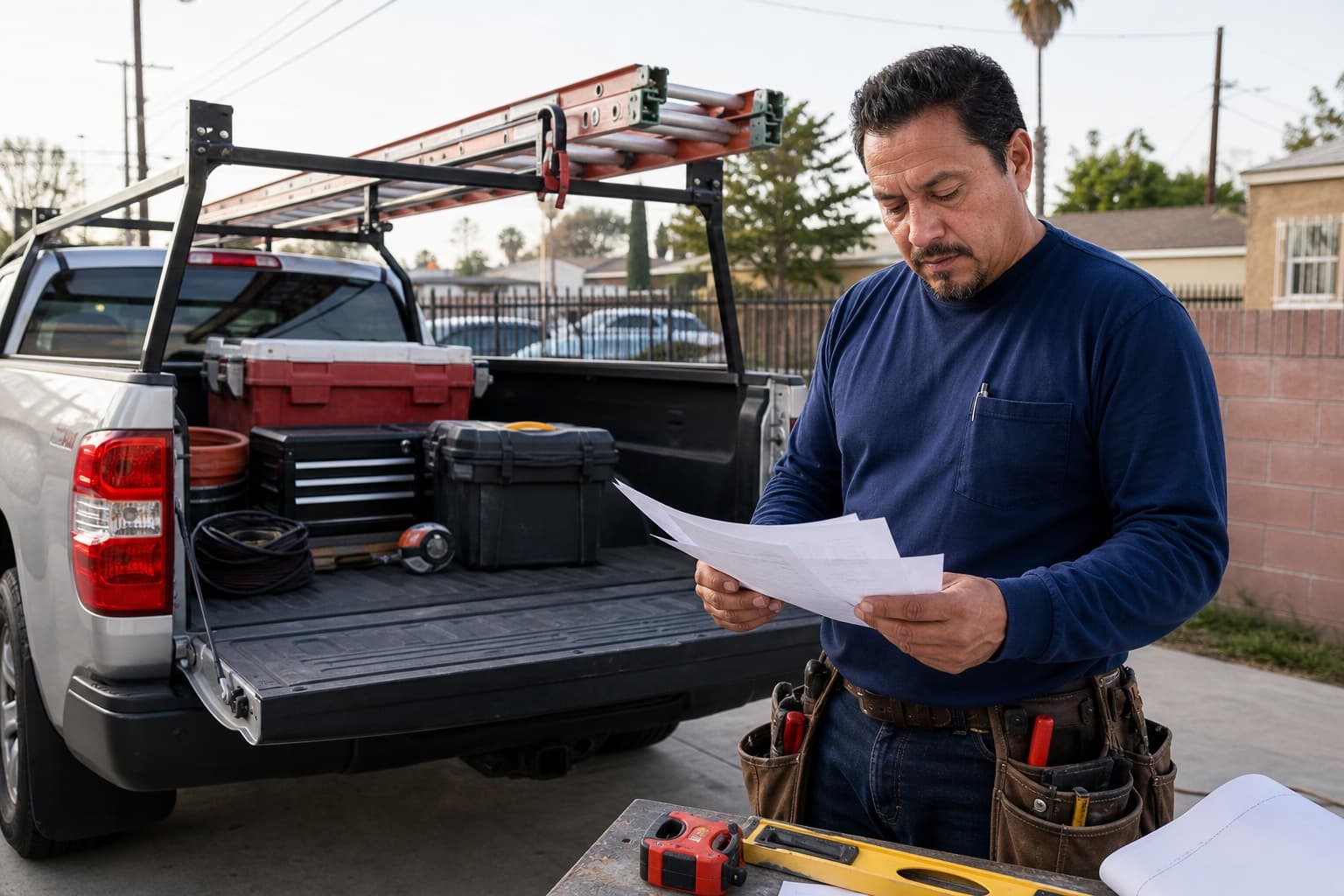
Describe the real job: tools driven to a service call, materials delivered to a customer, a trailer pulled to a worksite, or people transported for compensation. Do not base the answer only on what the vehicle did when it was first purchased.
Check weight and paperwork before the load changes
DMV registration requirements can depend on vehicle type and operating weight. The commercial-registration page lists forms such as REG 343 and, for applicable vehicles, a declared gross or combined gross vehicle weight form.
A heavier trailer, permanent equipment, body alteration, or a new type of work can change the questions. Bring the current registration, title or finance information, VIN, manufacturer weight information, and a realistic description of the heaviest load.
- Current registration and ownership or lease documents.
- Vehicle type, GVWR, unloaded weight, and heaviest expected load.
- Trailer details and combined operating weight, if applicable.
- How the truck is used, where it travels, and whether people or property are carried for compensation.
Match the insurance to business use
The California Department of Insurance explains that commercial auto coverage can protect a company from liability arising from vehicles used in the business and from damage to covered autos, depending on the policy. Business auto policies can also address scheduled, hired, or non-owned vehicles when that coverage is purchased.
Tell the agent about every regular driver, business radius, job type, tools or materials carried, towing, and any personal use. Ask for the coverage and exclusions in writing instead of assuming a personal policy follows a commercial registration—or the other way around.
Common questions
Is every pickup automatically a commercial vehicle?
Classification depends on the vehicle and its use. California DMV specifically discusses commercially used pickups, but some vehicles can be registered as passenger or commercial depending on use. Review the actual vehicle record and work activity.
Does commercial registration automatically provide commercial insurance?
No. Registration and insurance are separate. Ask the insurer in writing whether the policy covers the described business use, drivers, vehicle, and equipment.