
Small-business insurance review: what changed in your Southeast LA operation?
New sales, payroll, equipment, locations, contracts, or vehicle use can change business risks, so review the operation before simply renewing last year's limits.
Key takeaways
Commercial insurance can address different property and liability risks, but only the coverage actually purchased controls a claim.
Update the numbers used to rate the policy, including property values, payroll, sales, vehicles, drivers, and operations.
Bring new leases, client contracts, certificates, equipment, and locations to the review before renewing unchanged limits.
Describe the business as it operates today
The California Department of Insurance explains that commercial coverage can address property damage, interruption, theft, liability, worker injury, and other risks through different policy types. The right starting point is a current description of the operation, not only last year's policy.
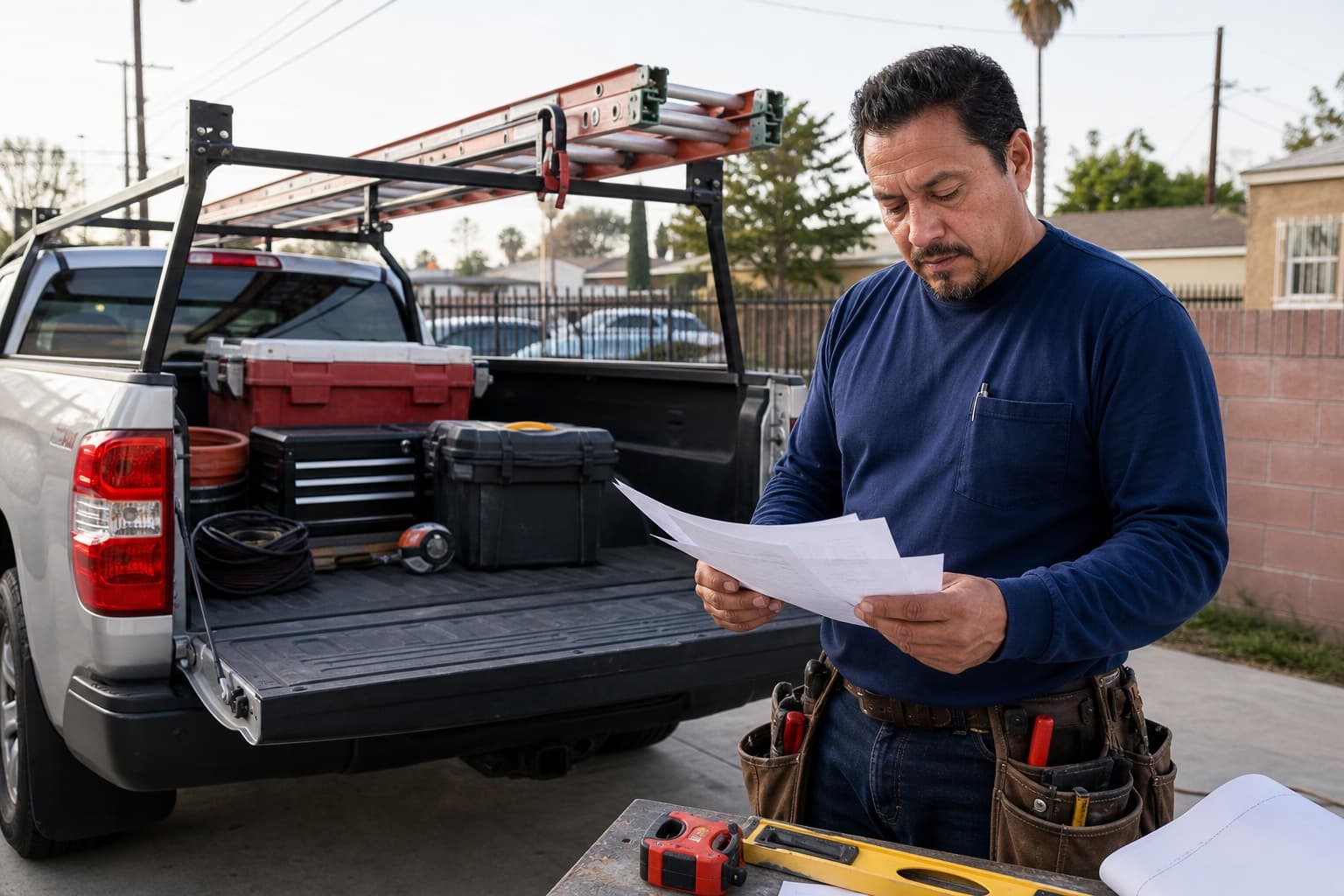
List products and services, physical and mobile locations, hours, employees and contractors, customers served, equipment, inventory, online activity, and every vehicle used for work. Point out anything that began or stopped during the year.
Refresh the exposure numbers behind the premium
The Department notes that commercial property rating can use building details, while general-liability rating may use square footage, payroll, or gross sales depending on the classification. Stale estimates can distort both price and coverage decisions.
Review replacement values for equipment and inventory rather than relying only on purchase price. Confirm business-income assumptions, deductibles, waiting periods, and the documents that would support a loss.
- Current gross sales, payroll, and employee count.
- Inventory, tools, computers, improvements, and other property values.
- New locations, leases, vendors, services, and customer contracts.
- Owned, hired, rented, and employee-owned vehicles used for business.
Check how policies connect—and where they do not
A commercial package can combine coverage parts, while a business owners policy may bundle property, general liability, and business interruption for qualifying businesses. Commercial auto, workers' compensation, cyber, professional liability, and umbrella needs may still require separate decisions.
Ask which named business and locations are insured, who is an insured, what exclusions apply, whether client-required limits are met, and how hired or non-owned autos are handled. Record the answer in writing and keep updated policies and certificates together.
Common questions
What changes should trigger a business insurance review?
New services, locations, employees, payroll, sales, equipment, inventory, contracts, vehicles, drivers, or online activity are all reasons to review coverage before renewal.
Does a business owners policy include every business risk?
No. A BOP combines certain coverages for qualifying businesses, but other risks such as commercial auto, workers' compensation, cyber, or professional liability may need separate treatment.